
Beginner’s Guide to Buying Meat Direct from Minnesota Farmers
Learn how to buy farm-direct meat from Minnesota farmers, including beef shares, pork, poultry, lamb, goat, bison, and other locally raised meats. This guide explains common bulk meat terms such as quarter beef, half hog, hanging weight, take-home weight, cut sheets, processing fees, and freezer planning.
Farm Direct Minnesota helps shoppers find and contact local farms, but does not sell meat directly. Customers contact each farm to ask about availability, pricing, share sizes, processing dates, pickup, delivery, and ordering details.
Last updated: September 2026
Quick Guide: Buying Meat Direct from Minnesota Farms
- Choose Your Meat or Share Size: Farms may offer individual cuts, bundles, quarter beef, half beef, whole beef, half hogs, whole hogs, whole lamb, goat, poultry, or other farm-direct meat options.
- Understand Hanging Weight: Bulk meat is often priced by hanging weight, which is the animal’s weight after initial processing. Take-home weight is the packaged meat you bring home and is usually lower than hanging weight.
- Ask About Processing Fees: Some farms include processing in the price, while others have customers pay the processor separately. Always ask what is included before ordering.
- Complete the Cut Sheet: A cut sheet tells the butcher or processor how you want steaks, roasts, chops, ribs, sausage, ground meat, packaging, and specialty cuts prepared.
- Plan Freezer Space: A general planning estimate is about 1 cubic foot of freezer space for every 35–40 lbs of packaged meat. Allow extra room for bulky packages and easier organization.
- Contact the Farm Directly: Availability, pricing, pickup dates, delivery options, deposits, and processing schedules vary by farm.
From Live Weight to Take-Home Meat: A Real Quarter Beef Example
When a Minnesota farmer sells beef by the share, customers may purchase a 1/8, 1/4, 1/2, or whole animal. The farmer takes the animal to a processor, where the customer can choose how their share is cut and packaged.
This real-world example shows a quarter Angus beef processed by Craig Byers, Lead Butcher and Processing Specialist at A-Star Services in Hillman, Minnesota.
Quarter-share equivalent: 393.5 lbs
Quarter hanging weight: 213 lbs
Ground beef: 66 lbs
Final take-home meat: 129 lbs
Craig Byers, Lead Butcher and Processing Specialist:
“We always let them choose all their cuts so it can vary.”
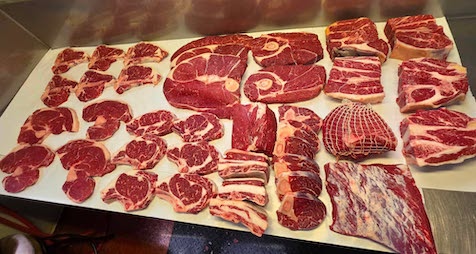
63 lbs of customer-selected beef cuts
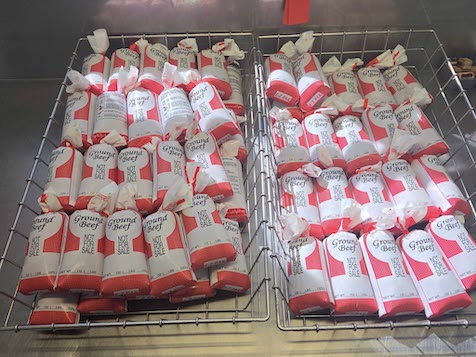
66 lbs of packaged ground beef
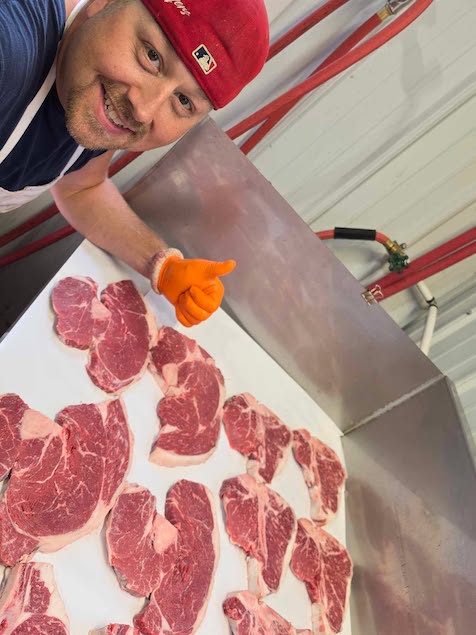
Craig Byers, Lead Butcher and Processing Specialist at A-Star Services
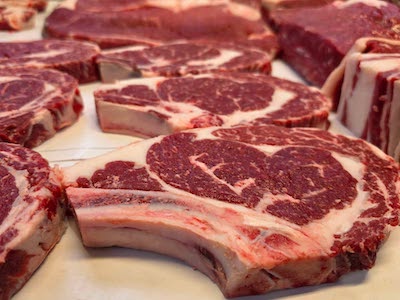
One of the finished Ribeye cuts from this quarter share
This is one real-world example. The final mix of steaks, roasts, ground beef, bones, and other cuts can vary depending on the animal and the cut choices made with the farmer and processor. Craig notes that the steaks in this example were cut 1 inch thick, so the customer received fewer steaks than they would have with a thinner cut, such as 3/4 inch.
All photos courtesy of A-Star Services
34353 213th Street, Hillman, MN 56338 • (320) 266-4950
Considering a larger beef purchase? Use the Bulk Beef Shares Guide and Beef Share & Freezer Calculator to estimate what may fit your household and freezer.
Use the guides below to learn about common farm-direct meat shares, cuts, freezer planning, and buying options for beef, pork, lamb, poultry, goat, and bison.
Buying a Quarter of Beef
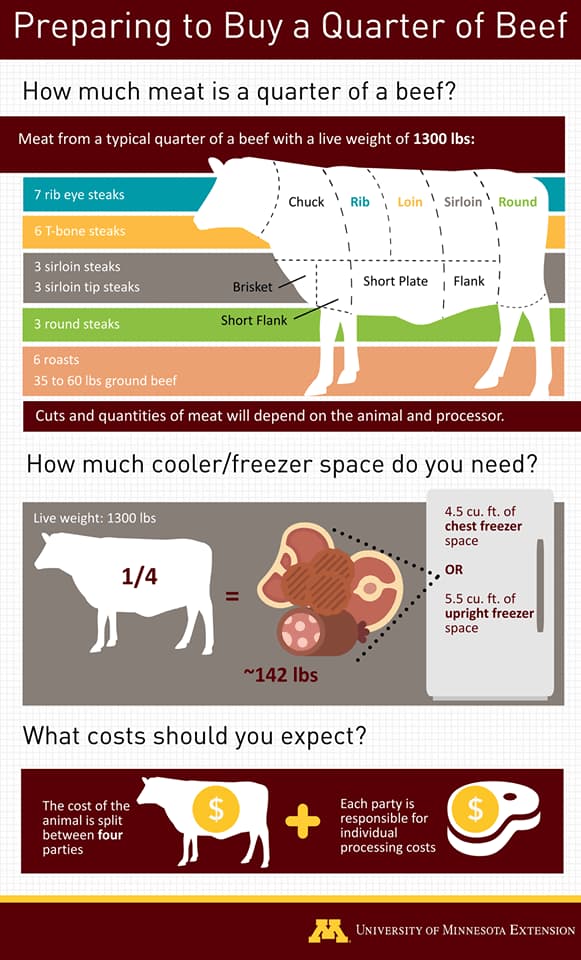
Beef Cuts & Cooking
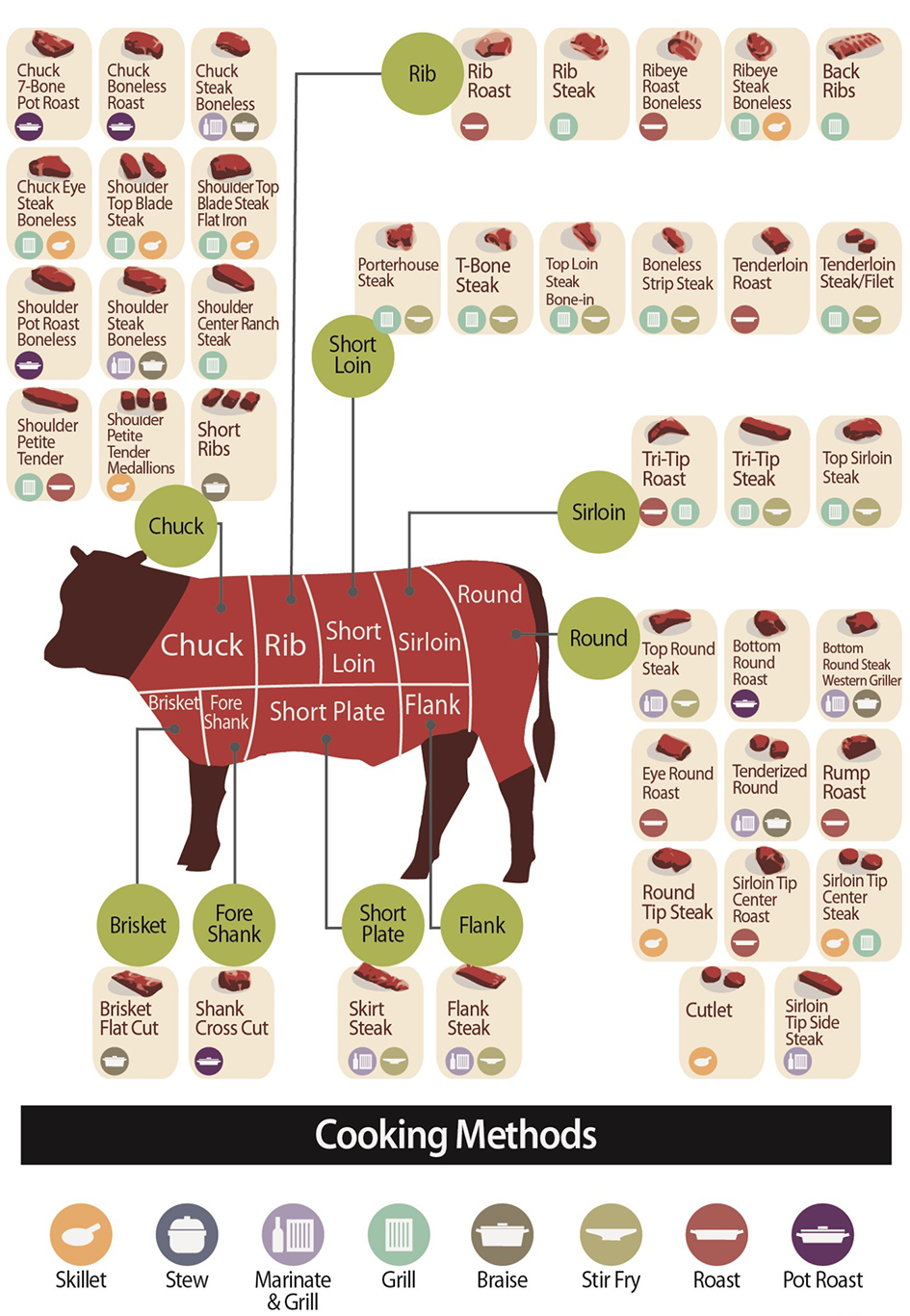
Buying 1/2 a Hog

Hog Cut Guide
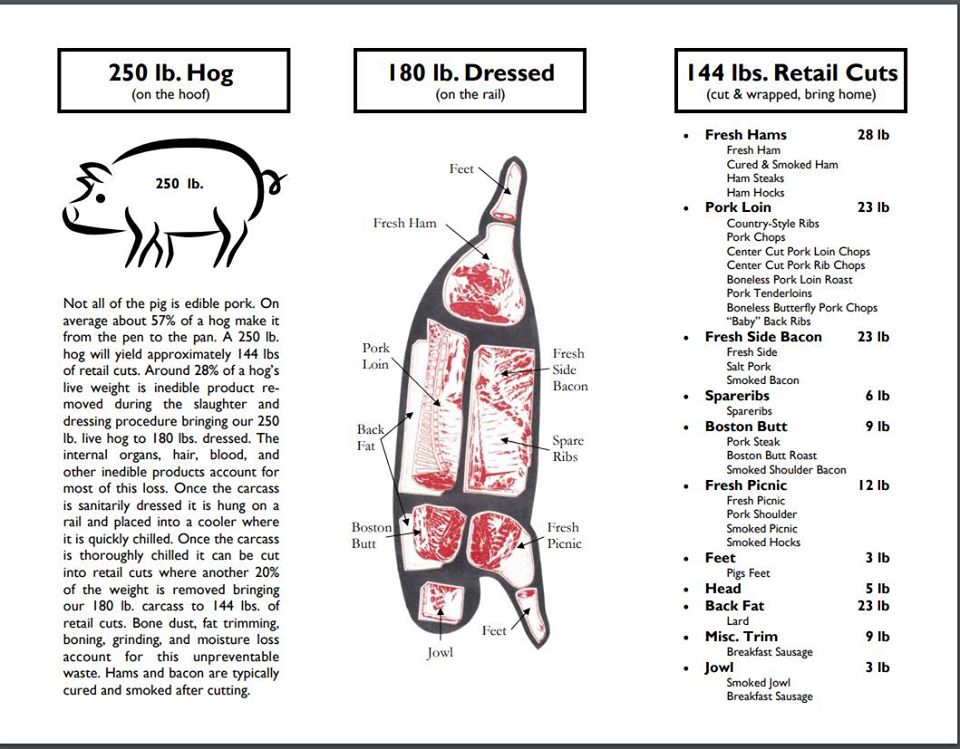
Buying Whole Lamb
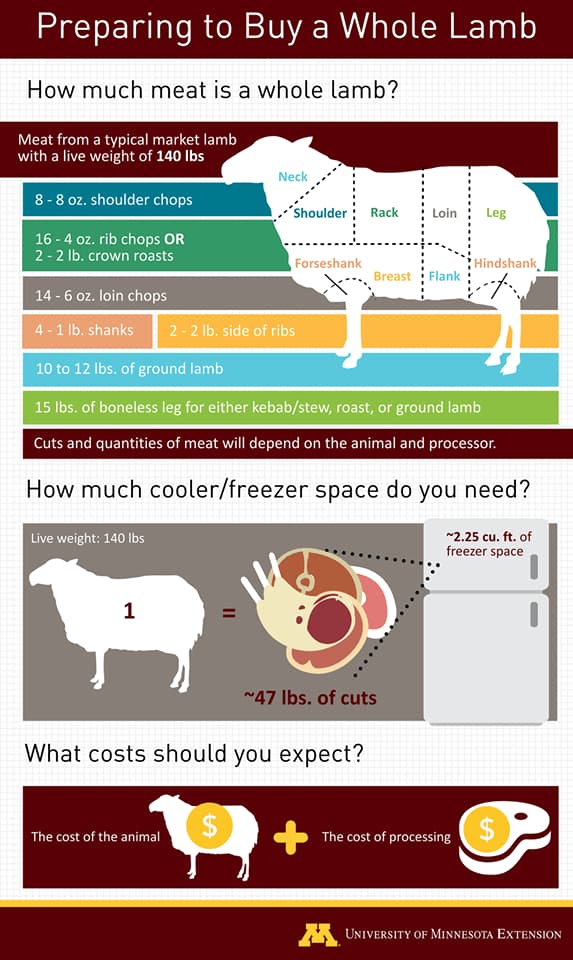
Lamb Cuts Chart
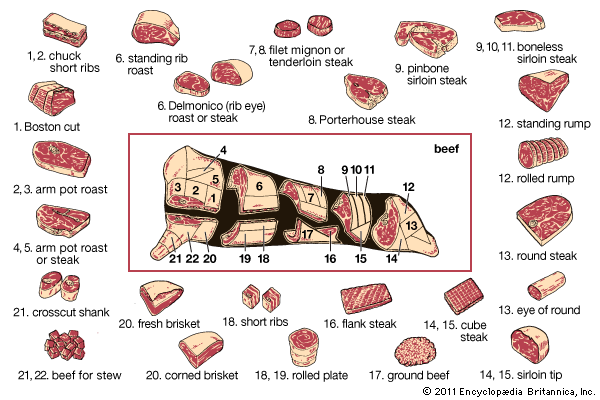
Buying Whole Chickens
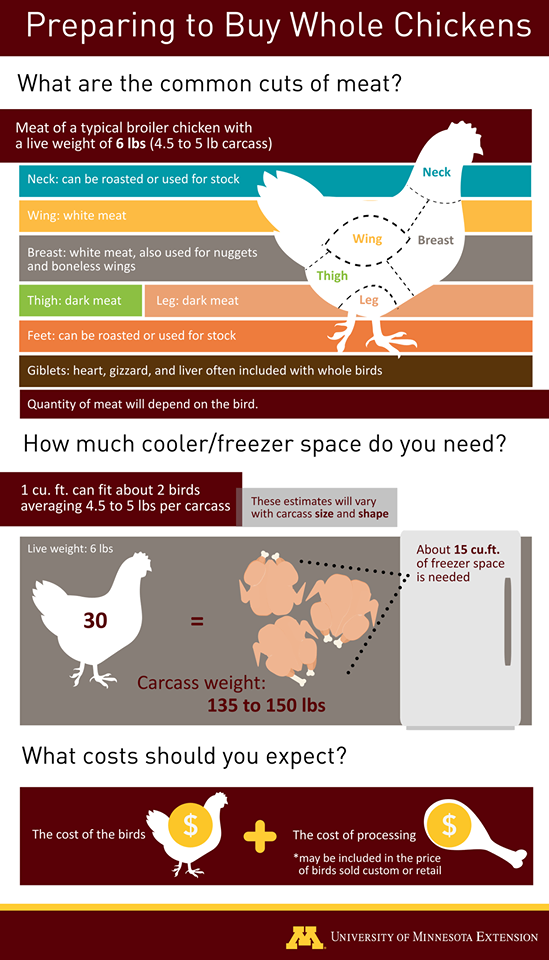
Buying a Whole Goat
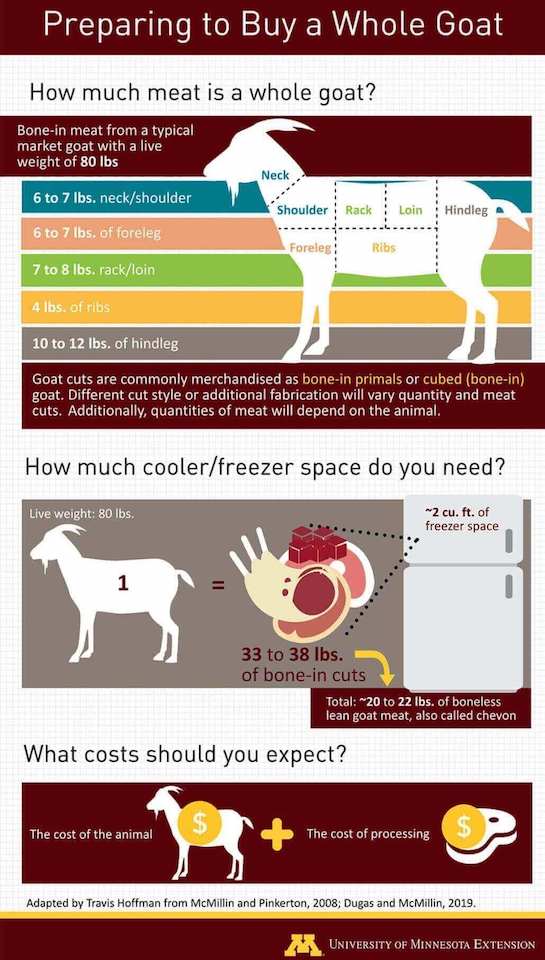
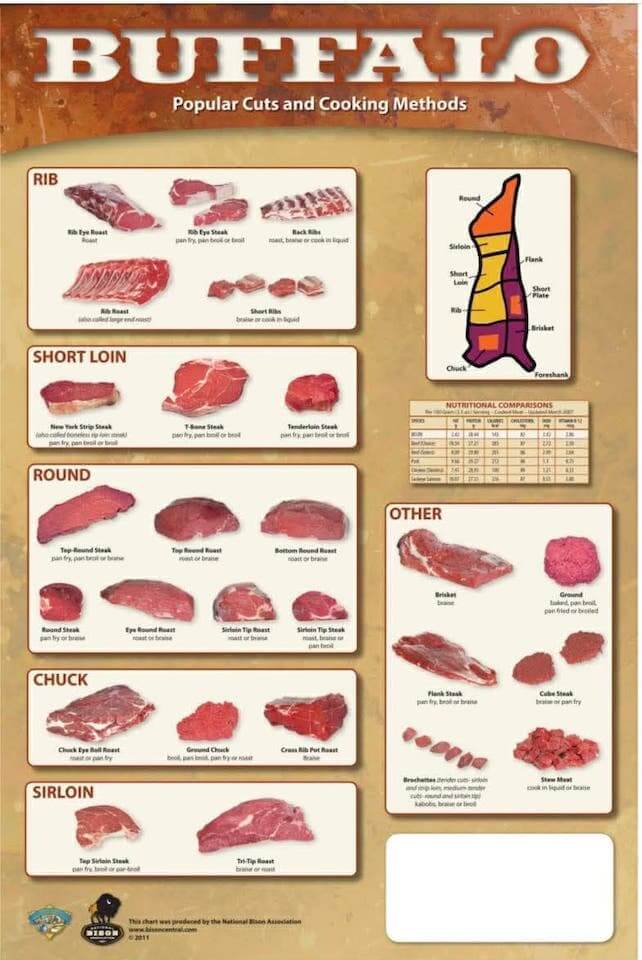
Buffalo - Bison Cuts Chart
Buffalo - Bison Primal Cuts
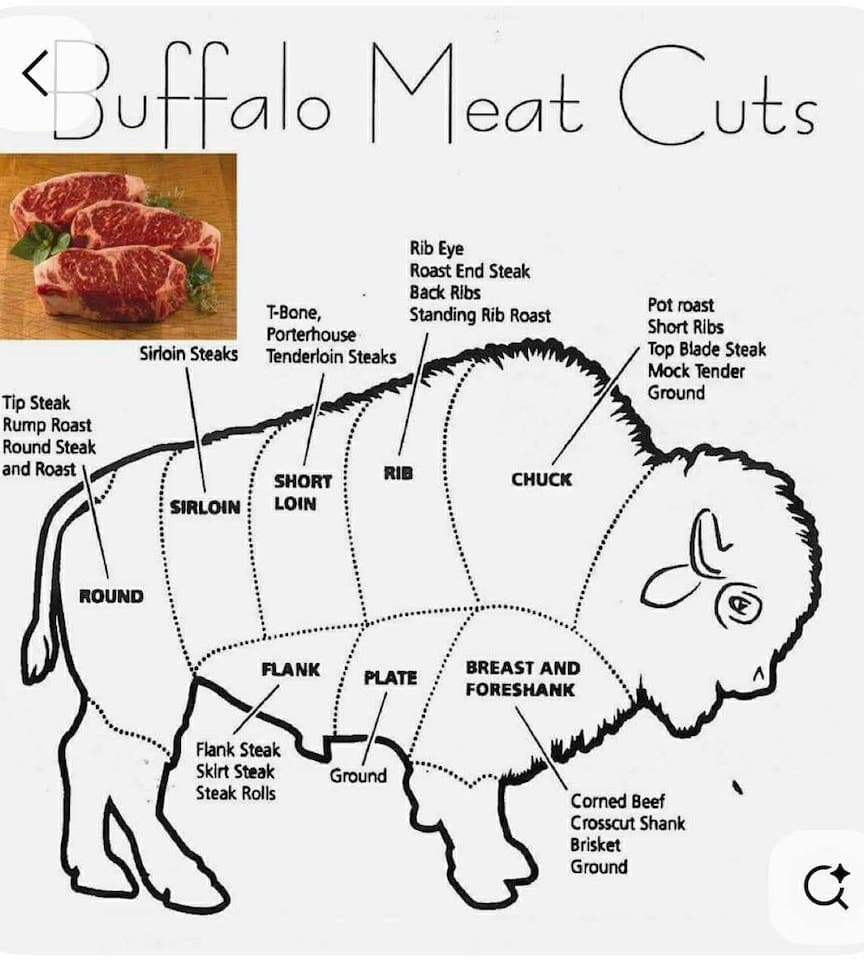
Thank you
Brewster's Bison
for the Bison - Buffalo images
The Meat Buyer’s Dictionary
These are common terms you may hear when buying beef, pork, lamb, goat, poultry, bison, or other meat directly from a Minnesota farm.
Weights, Pricing & Processing
- Live Weight: The animal's weight before slaughter, sometimes called weight “on the hoof.”
- Hanging Weight: The weight after initial processing. Bulk meat shares are often priced by hanging weight.
- Take-Home Weight: The packaged meat you actually bring home. This is usually less than hanging weight because bone, trim, moisture loss, and cut choices affect final yield.
- Processing Fee: The butcher or processor fee for cutting, wrapping, grinding, smoking, curing, sausage making, or other requested services.
- Cut Sheet: The form used to choose steaks, roasts, chops, ribs, ground meat, package sizes, thickness, sausage, bacon, and specialty cuts.
- Deposit: Some farms require a deposit to reserve a meat share before the animal goes to the processor.
- Processing Date: The scheduled date when the animal goes to the butcher or processor. Pickup usually happens after cutting, wrapping, and freezing are complete.
Raising Practices & Meat Terms
- Grass-Fed: Cattle or other ruminants raised on grass or forage for at least part of their diet.
- Grass-Finished: Animals finished on grass or forage instead of grain before processing.
- Grain-Finished: Animals finished with grain for additional marbling, tenderness, and flavor.
- Pasture-Raised: Animals raised with access to pasture or outdoor grazing areas, depending on the farm and species.
- Heritage Breed: Traditional livestock breeds often raised for flavor, hardiness, or breed preservation.
- Chevon / Cabrito: Terms used for goat meat.
Farm Direct Minnesota encourages shoppers to ask questions and verify details directly with each farm or processor.
You can also use the Minnesota Department of Agriculture license lookup when appropriate.
MDA License Lookup
Frequently Asked Questions About Buying Meat Direct
Does Farm Direct Minnesota sell meat directly?
No. Farm Direct Minnesota is a directory and local food connection resource. Customers contact each Minnesota farm directly to ask about meat availability, pricing, ordering, deposits, pickup, delivery, and processing details.
What is hanging weight?
Hanging weight is the weight of the animal after initial processing. Many bulk meat shares are priced by hanging weight, not by the final packaged meat weight.
What is take-home weight?
Take-home weight is the packaged meat you bring home. It is usually lower than hanging weight because bones, trim, moisture loss, cut choices, and processing options affect the final yield.
How much freezer space do I need?
A general planning estimate is about 1 cubic foot of freezer space for every 35–40 lbs of packaged meat. Allow extra room for bulky packages and easier organization. The amount needed can vary by species, share size, packaging, bones, and final cuts.
What is a cut sheet?
A cut sheet is the form used to tell the butcher or processor how you want your meat cut and packaged. It may include steak thickness, roast size, ground meat packages, sausage, bacon, chops, ribs, soup bones, fat, organs, and other options.
Do all farms price meat the same way?
No. Some farms price by hanging weight, some sell bundles or individual cuts, and some include processing while others have customers pay processing separately. Always ask the farm what is included before ordering.
How do I find Minnesota farms selling local meat?
Use the Farm Direct Minnesota Directory Map to search for farms offering beef, pork, poultry, lamb, goat, bison, eggs, dairy, and other local farm products. Contact farms directly for current availability.
Find Minnesota Farms Selling Local Meat
Use the Farm Direct Minnesota Directory Map to find farms offering beef, pork, poultry, lamb, goat, bison, eggs, dairy, and other local farm products. Contact each farm directly for current availability, pricing, processing dates, pickup, delivery, and ordering details.
- Find local meat farms across Minnesota.
- Search by product, location, farm name, or category.
- Connect directly with farmers before placing an order.



|
Join Directory • Search Map • Farm Market • Meat, Dairy & Eggs • Guides • News / Newsletter • Membership / Support • Sponsors & Partners • About • Contact • Site Map • Privacy
Farm Direct Minnesota • Sazzy Calhoun - Founder & Creator • PO Box 100 • Bethel, MN 55005
Email:
farmdirectminnesota@gmail.com
© 2026 Farm Direct Minnesota™
Est. May 2020
Farm Direct Minnesota is a local food directory and farm marketplace platform connecting you with fresh produce, local meat, and farmers markets.